MY EASEMENT STORY
My wife thinks I am crazy because I doggedly fight what I see as injustices when it comes to trail and easement promises by developers to the public. These issues are complicated and more prevalent than one might think. Here is a recounting of some of my fights.
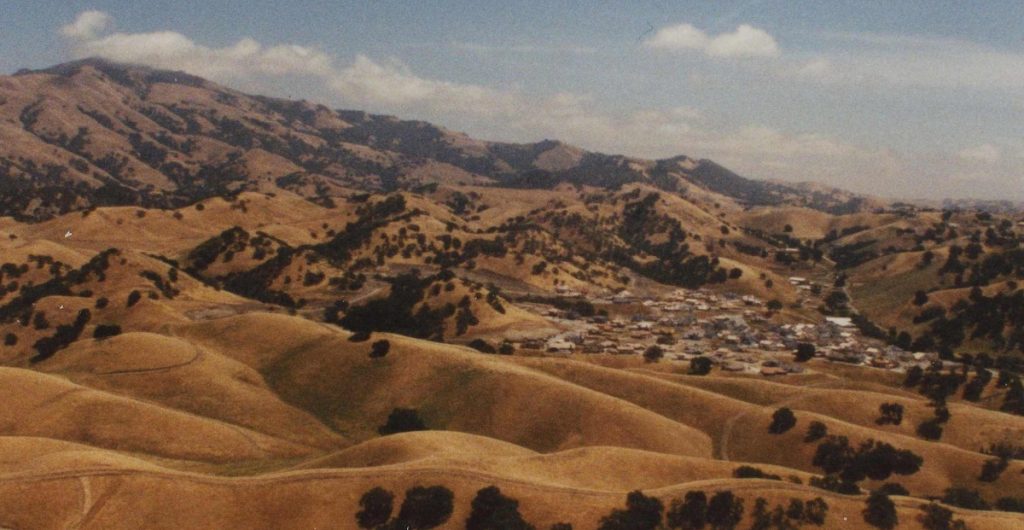
Our family moved from Danville to Alamo in 1988 and proceeded to explore the open spaces near our home. Our development called Stonegate is in a corner of Alamo where Shell Ridge (Walnut Creek Open Space), Diablo Foothills (EBRPD) and Mount Diablo State Park all connect.
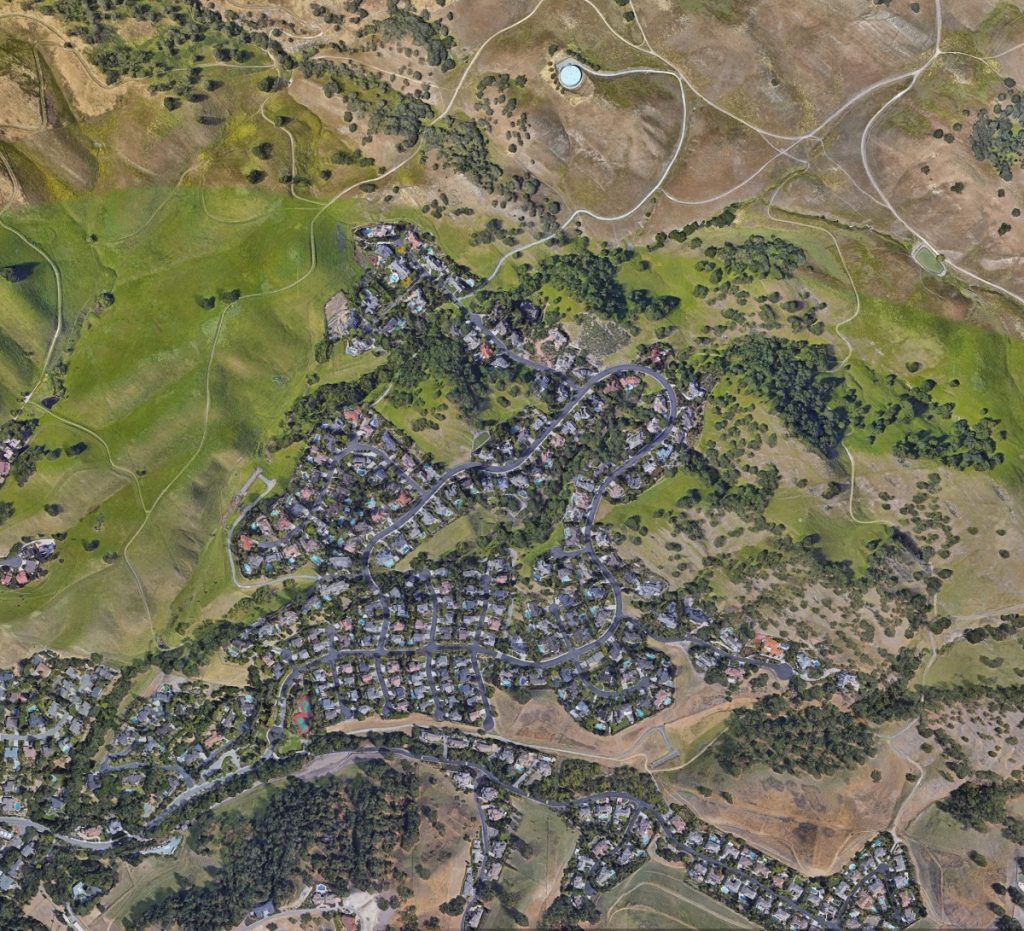
Our Cul de Sac has 22 homes and in 1989 my neighbors and I bought mountain bikes and our favorite loop was the Pine Canyon Loop, just under 8 miles. Our families routinely hiked with our young children and explored ridgelines and valleys including bugs and wildlife.
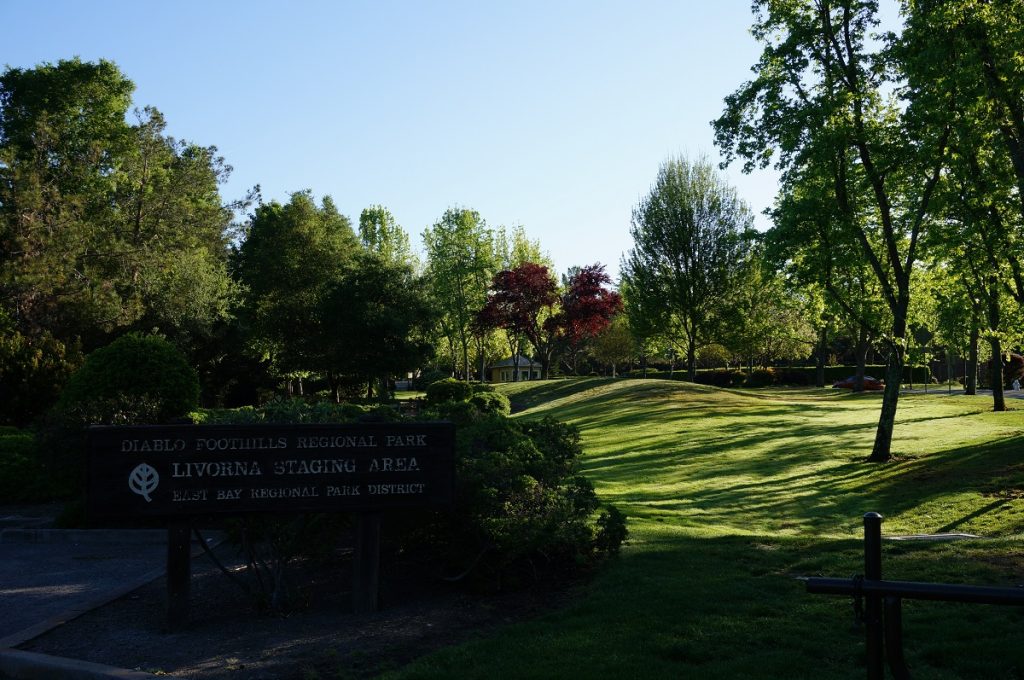
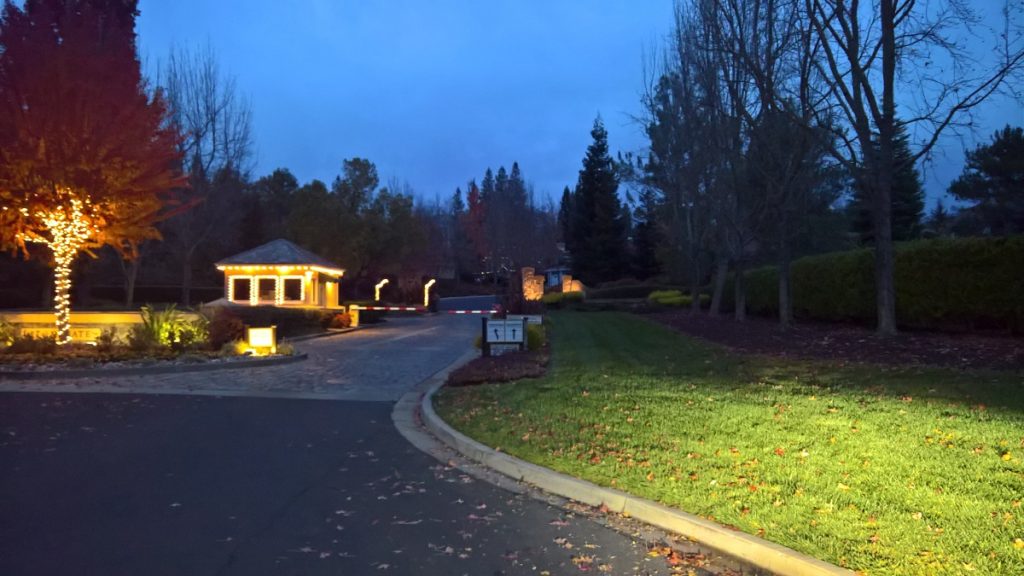
Stonegate is a gated private development with 32 acres of common area, 4 park entrances, a 20 car EBRPD staging area and two official EBRPD gates. It is not uncommon to see 10-20 cars parked in the staging area on weekends. Stonegate also receives zero county funds for roadway maintenance since we are technically private with no public right of passage.
Stonegate HOA maintains the landscaping at the EBRPD Staging area, gratis to the park district going back to when the development was being built out.
The guard gate restricts vehicle access but those on bike or walking are not restricted from coming into Stonegate to explore our internal trails or to access Diablo Foothills Regional Park. To be clear, some of our internal connectors are defined as Private.
By joining the Stonegate Board I developed some level of easement expertise due mainly to three easement issues that frustrated residents
Sanitary Roadway Easement
Stonegate was developed in two main phases, the first in 1988 and the second a couple years later. Linking the two phases was a paved Sanitary District pathway connecting cul-de-sac’s from the first and second phase.
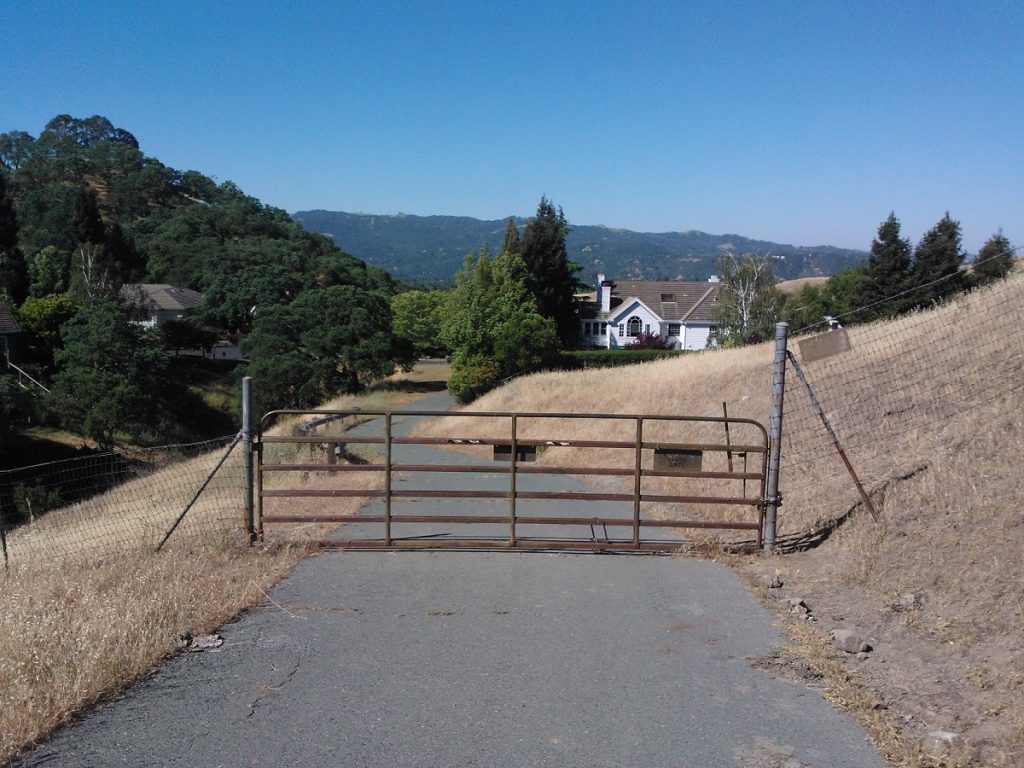
Stonegate residents had enjoyed the use of this roadway connector for over 10 years as it created a beautiful loop trail. Unfortunately, a new owner put up a fence and bullied the HOA Board, threatening legal action if anyone used this connector across their property. A weak HOA board backed down and Stonegate lost an important loop trail.
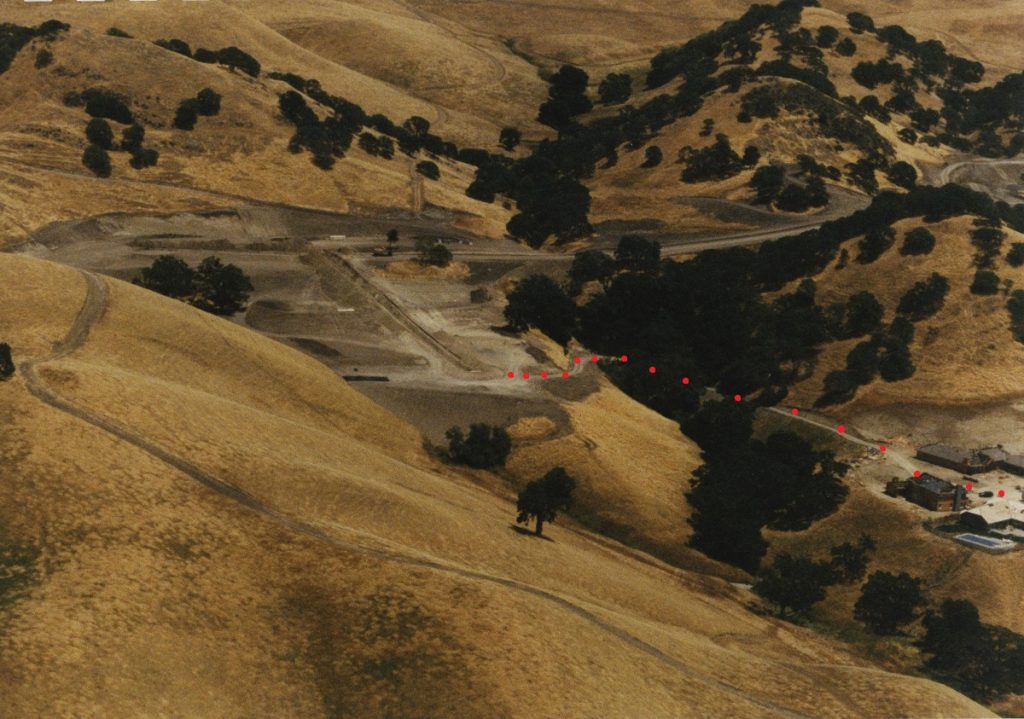
Busy with my own life at the time and only peripherally aware of the details, when I retired and joined the HOA Board, a second associated issue had cropped up. The actual roadway itself was failing and the Sanitary District’s answer to the problem was to deny residents any access to the roadway. They put locks on the gates and a sign saying do not enter.
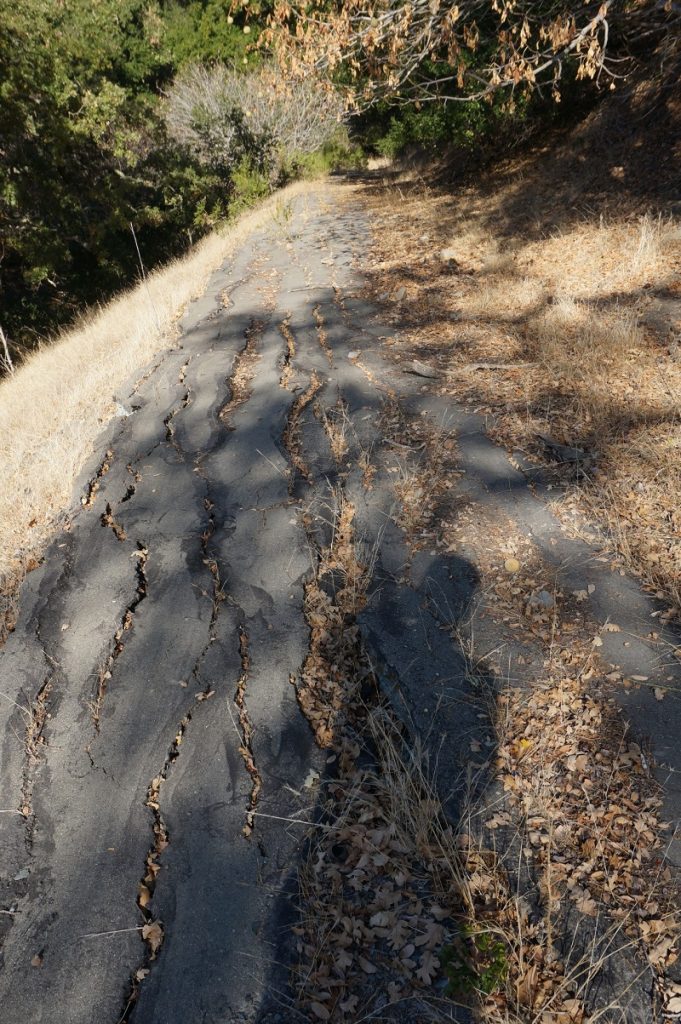
We pride ourselves on our 32 acres of common area, open and accessible to all residents, so the Board threatened legal action to remove the locks, resurface the roadway, and reopen it to residents. This was a two-year process, but it served to educate me on some of the nuances of easement law.
The Board then authorized the building of a new trail that bypassed the original homeowner property gate and offered residents the connectivity that had been lost for 15 years. A new, better solution for all. And an easement education for me.
EBRPD and Developer Promises Undelivered
Stonegate developers promised pedestrian gate access to Diablo Foothills Regional Park in multiple locations within Stonegate and yet none were provided. Residents had to climb the gate to access the Park. This connection was a bit complicated because it was a joint EBMUD and EBRPD easement. It took our Board 3 years to settle this issue. The solution was a new 12-foot-wide vehicle gate and a 4-foot-wide pedestrian gate in place of the 16-foot-wide vehicle gate. Simple, inexpensive and yet dealing with the park district was not easy.
Alamo Trail and Acceptance of a Dedication
Emboldened by some successes and increased knowledge of public rights related to the development process led to the third easement issue. When Stonegate was approved, a new 1/2 mile long trail was built connecting the new EBRPD Livorna Staging area with a Regional Park Gate and this trail is named the Alamo Trail on the official Park Map.
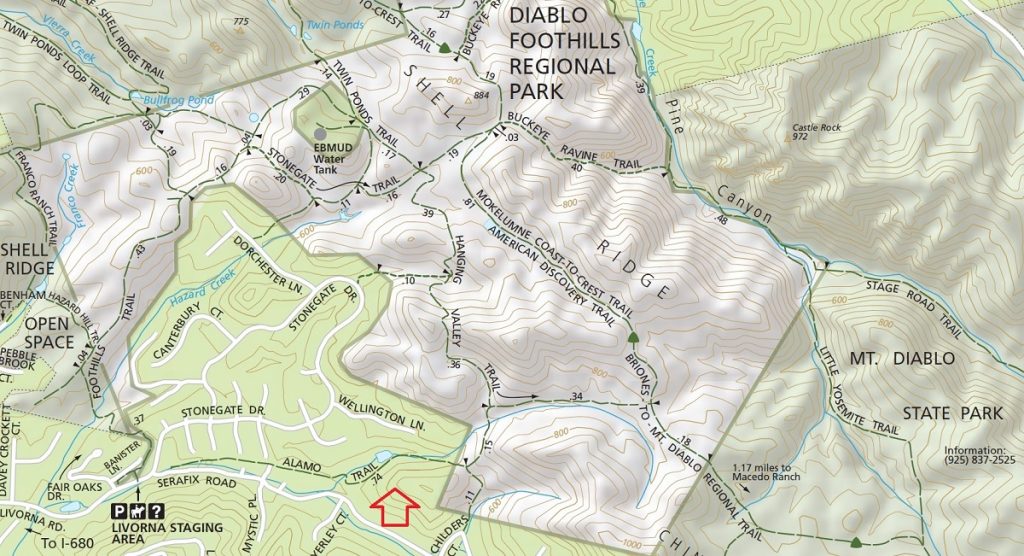
When our Board tried to determine who was responsible for this trail, we learned about the issues of a dedication to a public agency and how this issue becomes muddled and prone to legal infighting.
The trail is primarily on Stonegate HOA property, partly on Flood Control property and was formally dedicated on the subdivision map as an easement to R7A, the County recreational district.
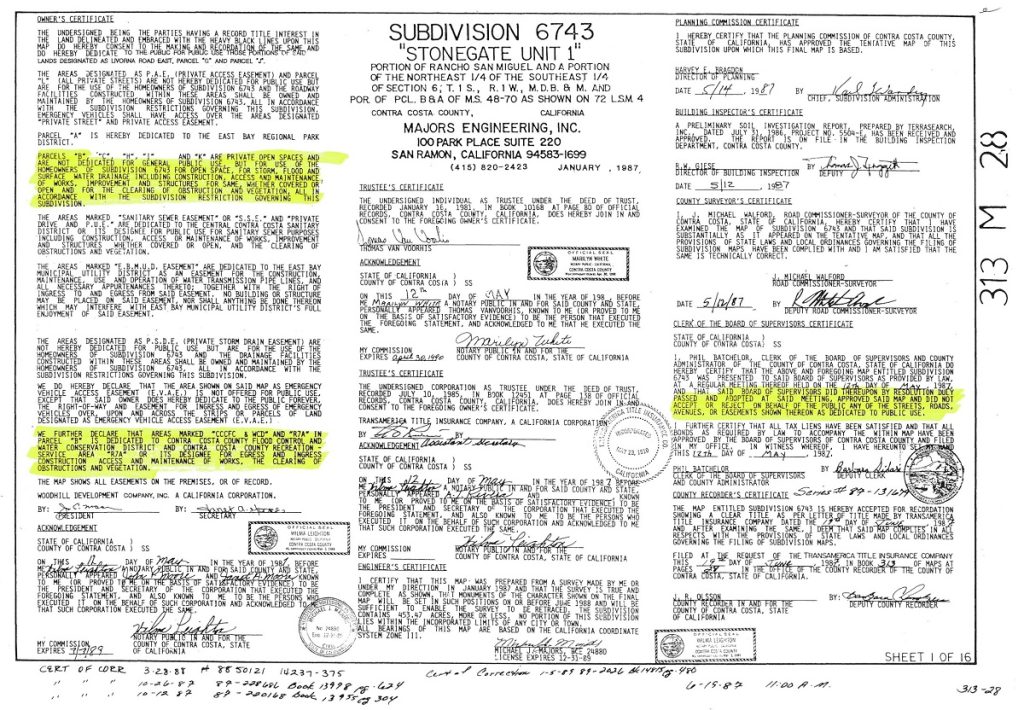
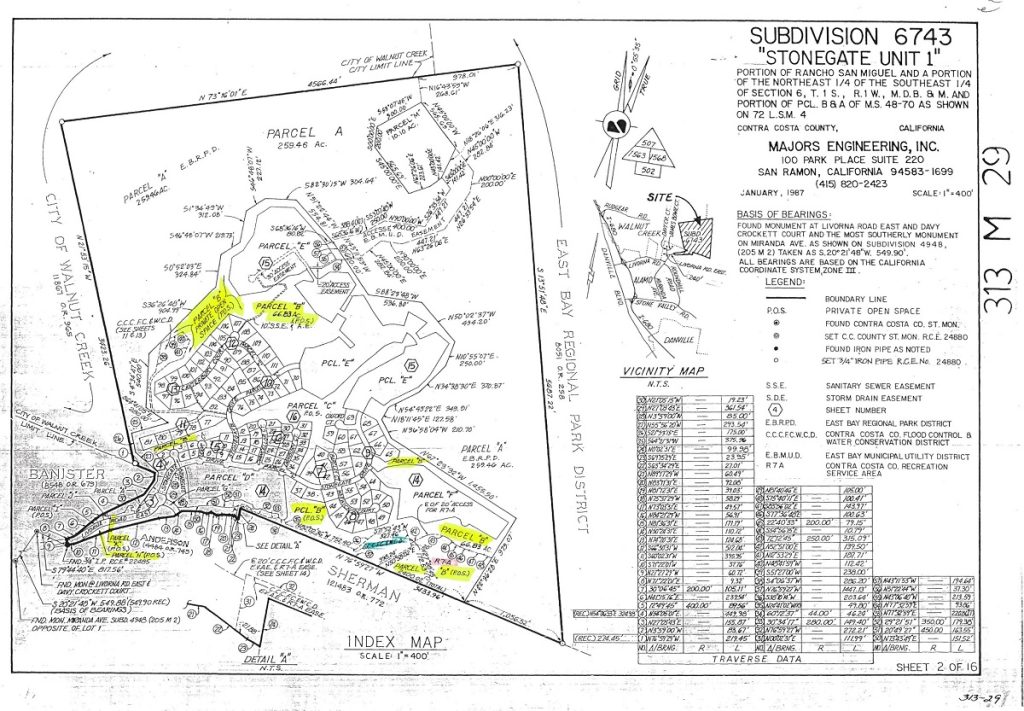
Calls to the County were met with “We know nothing about this, we never accepted anything”.
We asked out lawyers if we could just close the trail to the public? If it is on our land and has not been accepted by the Couty as an easement, can we just restrict public access? We did not have any desire to close the trail but we wanted to know our rights especially related to maintenance responsibilities.
It took us two tries, but we finally got an easement lawyer who understood the intricacies of such a situation.
Here is my own interpretation of the law. Starting in the 1970s and extending thru the early 2000s, subdivision activity was exploding statewide and trail activity was expanding. Open spaces and trails were becoming key selling points for buyers of homes. But the courts were caught in a whirlwind of decisions that went one way, then on appeal the other way and finally the California Supreme Court stepped in to try and help clarify law going forward.
As explained by our lawyer, easement law requires a dedication and an acceptance for a valid contract. Simple enough. In the case of this Alamo Trail, there was an irrevocable expressly dedicated easement clearly shown on the subdivision map with a clear easement holder, R7A. Absent a formal acceptance by R7A, the acceptance of such an expressly dedicated easement turns then to the public. Did the public accept the easement through their regular, continuous and widespread use of the easement for all manner of recreational purposes? If so, then we have a legal agreement. A dedication and an acceptance and the public has every right to use the trail.
Diablo Easement Issue
Fast forward to early 2020 and I received an email from a local bike safety advocate asking if I knew of any good easement lawyers. Al Kalin, a well-known local cycling safety advocate, was looking for some help on a long running case related to an easement within Diablo connecting Alameda Diablo to Mt. Diablo Scenic Blvd.
In 2017, a resident of Calle Arroyo in Diablo (a narrow golf course street) sued his neighbors and the Diablo Community Service District in the hopes of having his street declared private and essentially regulating who could use it. The target was mainly the cycling community that regularly rides through Diablo to access the State Park.
Bike East Bay, a local cycling organization, stepped in with a pro bono lawyer to oppose this action and proved to be over matched and underprepared. The Courts ruled and the result did not satisfy the anti-cyclist group in Diablo, so part of the group filed what’s called a “complaint-in-intervention” in order to insert themselves into the case, the practical result of which was essentially that a new action was filed a new target was chosen, and a new lawsuit begun.
This new complaint targeted cyclists by attempting to shut down the 100-year-old connector between Alameda Diablo and Mt. Diablo Scenic Blvd. They sued the DCSD and the property owners in the immediate area.
Learning about this new lawsuit and the need for a good easement lawyer and being a trails and public rights kind of guy, I responded to Al by saying that I knew of a great easement lawyer and I would willingly pay the legal fees to protect the public’s right to use this connector (including cyclists).
I saw this new lawsuit as just another bullying tactic aimed at restricting public use of a long-standing easement between streets and important connection to Mount Diablo State Park.
Like in Stonegate and the Alamo Trail, here we have an expressly dedicated easement clearly specified on the Subdivision Map in 1979
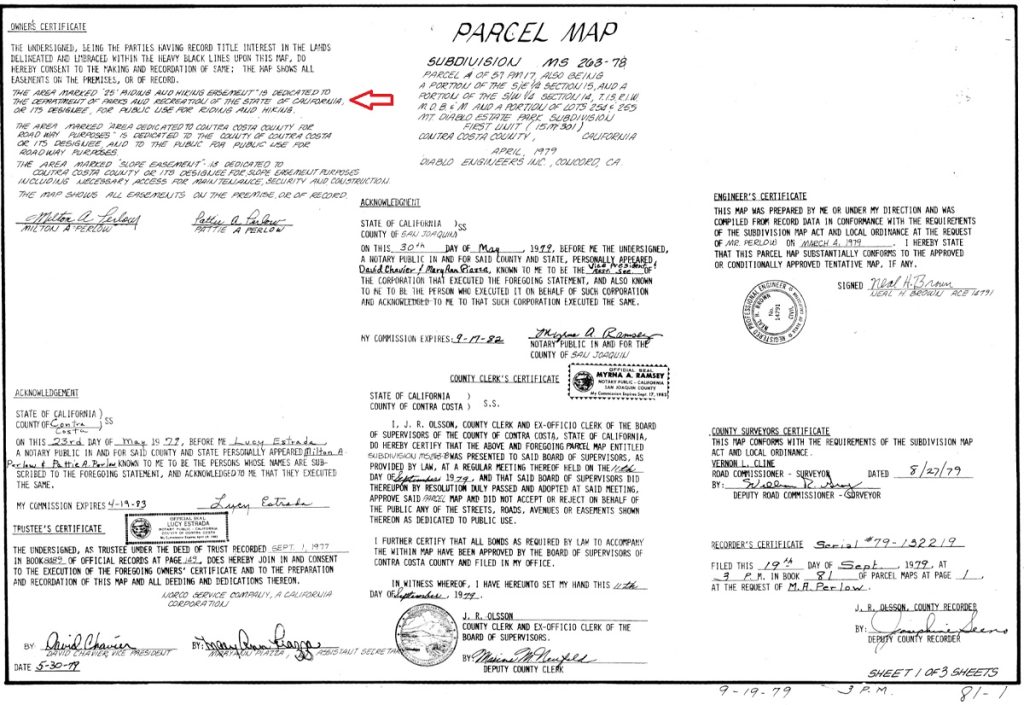
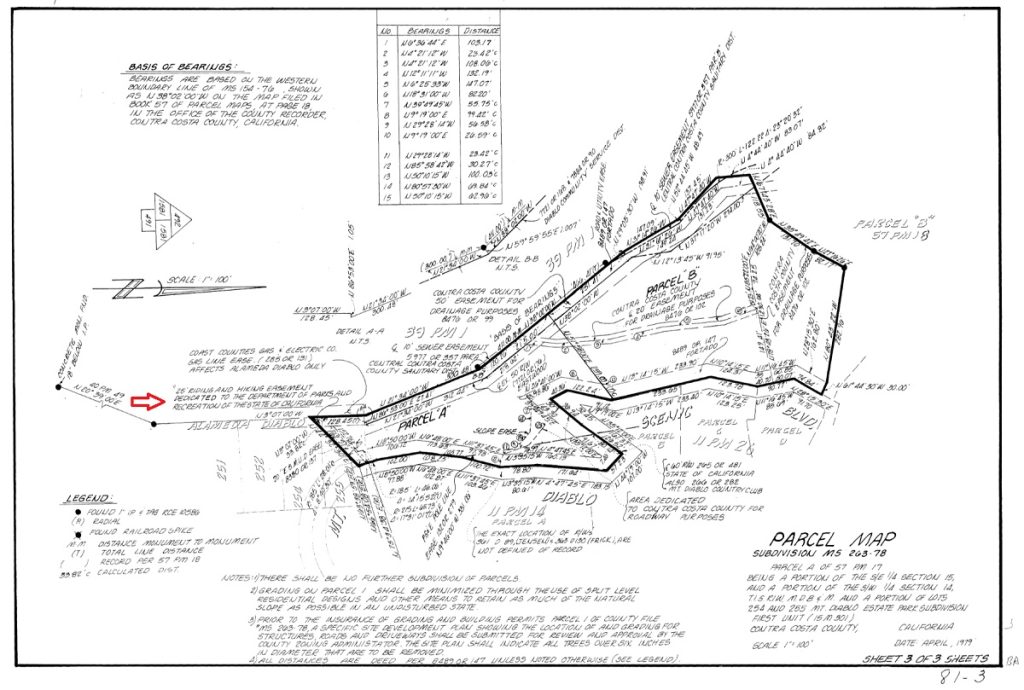
We have a Subdivision Map recorded dedication of a 25-foot-wide riding and hiking easement dedicated to the Department of Parks and Recreation of the State of California. Short of a clear acceptance by the State Park, we then need to ask whether the public accepted the easement through their regular, continuous and widespread use of the easement for all manner of recreational purposes.
I would go so far as to suggest that this riding and hiking easement was specifically designed for cyclists including local children who commuted to and from school on bikes. These users were the main users of this connector from the early 1970s as the local cycling clubs preferred this safer route to the park.
Equestrians did not like to use this connector because it required them to ride their horses along the sharp, narrow curves of Mt. Diablo Scenic Blvd. to access the State Park. They petitioned for and got the DCSD to accept Kay’s Trail as their horse and hiker easement. Kay’s Trail, originally a 1975 lease agreement was formally accepted by the DCSD in 1982, protecting safer equestrian access to the State Park.
This same easement location has been in use by the public for over 100 years and today we estimate more than 60,000 people annually use this connector. That is 5,000 a month or 166 a day and these users are cyclists, students headed to or from school, dog walkers, hikers, Diablo residents headed to the golf course or Post Office and of course all manner of hikers and bikers headed to Mount Diablo roads and trails.
Easement Challenges
The whole issue of easements has been a big impediment to trail connectivity between private and public spaces.
In Stonegate we have a better community because we stood up for and encouraged public use of trails and connectors that were promised but poorly delivered.
Diablo is proudly the Southern Gateway to Mount Diablo, and always has been. Diablo has provided over 100 years of public use of its streets as connectors to Mount Diablo roads and trails. Many residents bought their homes in Diablo because of this connectivity.