TRAIL HISTORY – DIABLO AND CALIFORNIA
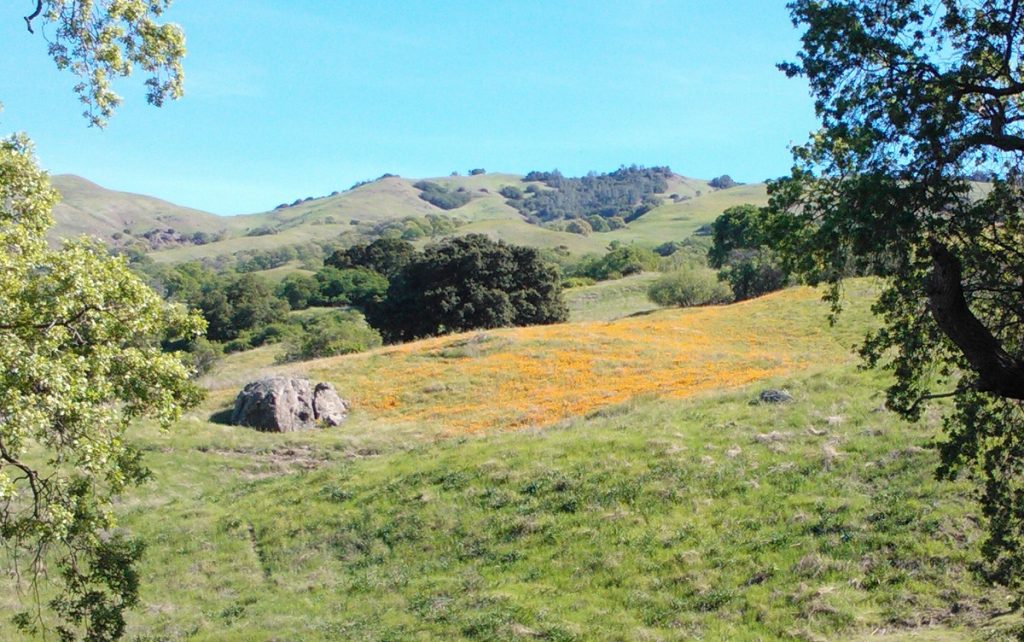
Multi-User Trail History – Contra Costa County and Mount Diablo
Do you ever hike or ride on a trail and reflect on its history? How long has that trail been in existence, what did it look like 50 years or 100 years ago? On Mount Diablo, we have trails that go back 150 years.
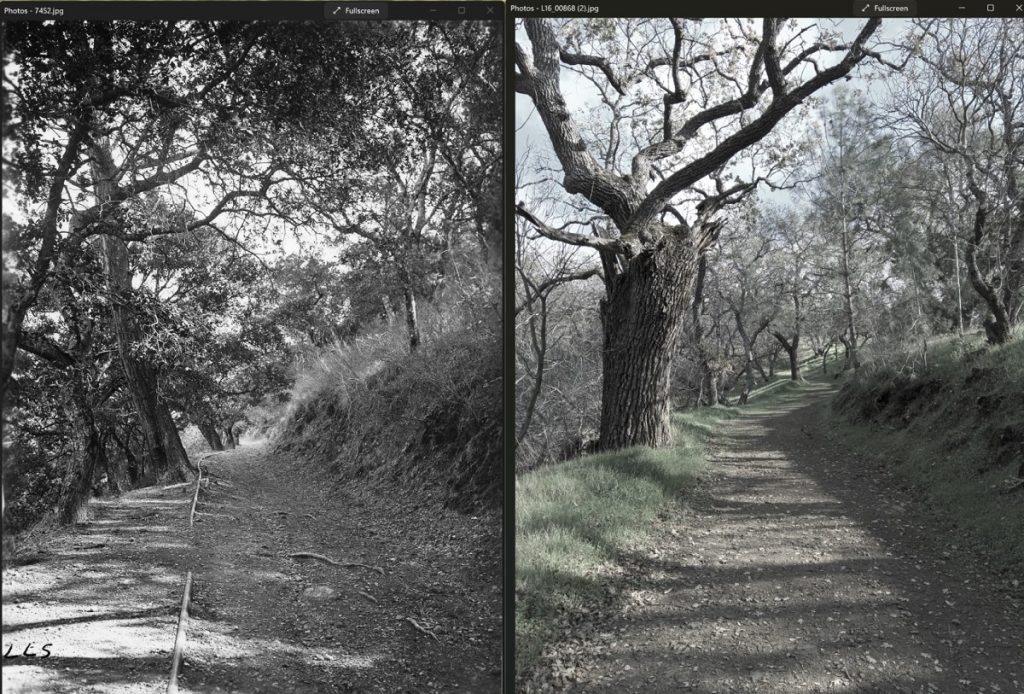
Pine Canyon and Dan Cook Canyon ranch roads were originally built in 1874 as Stage Routes to the Summit of Mount Diablo. The left picture was taken in 1912 and the right is from 2021. Is it the same location? Which stage road is represented?
Public Trails as a California priority go back to 1945 when the California Legislature passed the California Riding and Hiking Trails Act. This act was in reaction to trail advocate pressures from across the state for trail funding and open space access.
This initial act envisioned a 3,000 statewide loop trail and this vision quickly became too limiting. One loop trail across so many counties and jurisdictions proved a legal and practical nightmare due to politics, easement issues, and the connections between public and private lands. 10 years later only 1,000 miles were established.
By 1955 the original act (CRHT) was amended to permit the inclusion of secondary trails and connectors.
The original act had created a massive demand for new trails and this amendment offered more flexibility to accommodate feeder trails.
Another ten years went by and the act became even more expansive with new flexibility for adding a series of local loop trails to serve more Californians.
Ten years later, in 1974 the original act was repealed and amended again and renamed the California Recreational Trails Act. Now more expansive, it included fostering cultural heritage and providing trails for all user groups including the disabled.
30 years of public policy trail evolution
Consider the dedication of volunteers across the state who envisioned this idea of interconnected trails. Their efforts paid off with more and better connectivity of public trails. Imagine the patience required during an exciting but frustratingly slow-moving process.
Significant trail efforts were made right here in the Contra Costa and Alameda Counties. In fact, much of the Statewide trail momentum began right here by two trail advocates, Hulet Hornbeck and George Cardinet.
Hulet Hornbeck
Hulet was the Chief of Land Acquisition for the East Bay Regional Park District from the mid-1960s thru the mid-1980s, a period of explosive growth and change. Yet he always maintained a consistent vision, one of inclusion and multi-user connectivity of trails and open spaces.
He came to California in 1957 after having lived in New Jersey and Michigan and as an outdoor adventurer, he joined the Sierra Club. He lived in Contra Costa County and looked at the beauty and diversity of the natural environment and he decided to lobby for and encourage the development of parkland for public enjoyment.
In those days it was all about public funding and efforts were being made in California to offer Statewide Bonds whose funds could be earmarked for parkland purchases and protections. In 1964 Proposition 1, the Recreational Land Bond Measure was passed with a 62% majority raising $150 million for the acquisition and development of lands for recreational purposes.
Because the EBRPD was already in existence (in Alameda County) and because much of the funding would be allocated to Counties for their local use, in 1965 the East Bay Regional Park District expanded into Contra Costa County. Hulet became the EBRPD Land Acquisition point man. Working side by side with the State Park itself, in the next 20 years Hulet is credited with adding close to 50,000 acres to the Park District lands and expanding the number of Parks from eight to 46. Mount Diablo State Park also benefitted from this partnership with EBRPD as thousands of acres were also added to Mt. Diablo State Park.
Hulet offers us a glimpse into some early history of trails and open space protections in a 1981 oral history interview conducted by Carole Hicke. (link at bottom of article)
The next few paragraphs were paraphrased from this interview except for where quotes are used and those are direct quotes from Hulet.
But with all his energy and foresight what set Hulet apart was his unwavering support and relentless energy dedicated to the interconnectivity of trails and roadways and linkages of open spaces. He says:
“ I was thinking about this while I was driving to work. I’ve already said that there is no other urban area in the United States that’s similarly involved in urban trails connecting county park lands or regional parklands or other park lands by off-road trails, that we are leading the country there and therefore the world.”
Further bond acts in 1974, 1976 and 1980 provided continued funds which were then deployed by the Park District through Hulet’s team as well as by the State as they expanded Mount Diablo State Park.
Regarding the local trail system, the interviewer in 1981 asks Hulet, “I believe that you are the architect of the trails system, Can you tell me that story? (Here Hulet reflects on the time period of the early 1970s as a point of reference)
“Yes, That’s kind of a fun story. That goes back to when I came to the District. In the Park Council (a blending of the Contra Costa Council and the County Park and Recreation Commission) there had never been any talk about trails. It was hard enough to get some parkland. But when the parkland started to come, the trail people started to come along and say, “Now we want some trails.” So that was one of the first things that we did, and it may have been a “first” in the state.
I realized that the hikers and the equestrians were constantly fighting each other. The hikers would say, “We don’t want these equestrians around because they crap on the trail or they cause erosion. These horse people are pretty stuffy, and they are all wealthy, and they just come down the trail and we have to step aside.” The bicyclists were doing their thing.
We got together with George Cardinet of Contra Costa County and we said, “We’ll set up a meeting and put them all in the same room together.” We set up the East Bay Trail Council and said, “You guys fight your own battles inside this room. When you go outside to a city council meeting, you had better talk the same language, because otherwise you are all divided and you don’t stand a chance.”
We set up the East Bay Trail Council to be like the Park Council. It met every month.
East Bay Area Trails Council (EBATC)
The Bylaws of this new organization (see link at bottom of article) officially called the East Bay Area Trails Council (EBATC) were signed on July 28, 1970 (an Oakland Tribune article in Jan 1969 says Hulet was President of the EBATC at that time) and the purpose of the organization shall be:
To provide an area-wide basis for collaboration and liaison for all groups, bodies, or entities that are involved in the planning, funding, acquisition, development maintenance and use of trails.
To further the use and development of trails and to espouse legislation to this end locally, statewide, and nationally
To further the protection of the scenic and recreational resources of the East Bay Area for public use and enjoyment.
Membership shall be divided into three categories, individual members, political entities or governmental agencies, and Associations, clubs, or other organizations interested in using and maintaining trails or in protecting the scenic and recreational resources of the area.
The standing committees shall be
Hiking Trails
Biking Trails
Motorcycle Trails and Mechanical Parks
Horseback trails
Legislation Committee
Liaison Committee
Conservation Committee
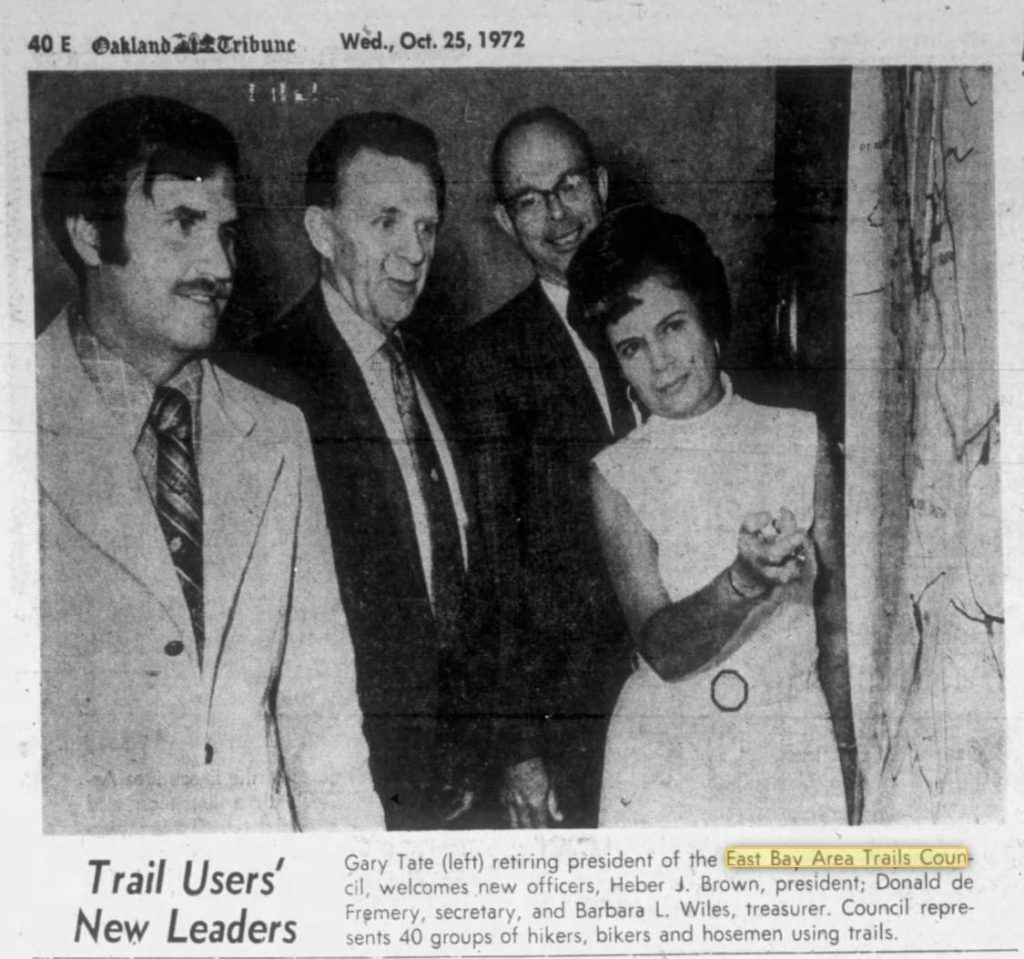
If you wanted to work for access, you needed a seat at the table. And you needed to be willing to work together with other user groups to speak with one voice to the public agencies and funding sources.
The East Bay Area Trails Council was incredibly effective in trail connectivity efforts. Imagine an organization that met monthly, followed all manner of trail and easement and outreach opportunities, and then advocated for multi-user linkages between parks and open spaces.
This organization lasted for over 40 critical years and finally disbanded in 2012 when it became apparent that the three big agencies (State Parks, EBRPD, and EBMUD) had become more bureaucratic and somewhat tone-deaf to outside voices. (I say that fully understanding that the sheer magnitude of trail demands greatly outweigh agency budgets, monetary or staffing.)
EBATC Monthly meetings hammered out solutions where competing trail user groups advocated for the interconnectivity of trails and for multi-user trails and more public access. An impressive achievement when each user group privately had their own biases and preferences.
To give an idea of the diversity of the EBATC members here is a partial list of 1984 membership renewals:
EBRPD Director John O Donnell
Pleasant Hill Recreational Park District
City of Concord
Sierra Club
San Ramon Valley Horsemen’s Association
Agnes D. Finch (a former EBATC Board member)
Hulet Hornbeck
Es Anderson (well-known active equestrian)
Lucile Arnon
Berkeley Hiking Club
East Bay Bicycle Coalition (now known as Bike East Bay)
Offroad International Society National Off-Road Bicycle Association
CCC Sheriff Posse
Hayward Hiking Club
Rossmoor Horsemen’s Association
East Bay Regional Park District Bob Doyle
San Francisco Bay Area Council Boy Scouts of America
Moraga Horsemen’s Association
City of Lafayette Parks and recreation
Ridgelands Park Committee
Tilden-Wildcat Horsemen’s Association
Jana Olson (former EBRPD Trails Coordinator)
Contra Costa Hills Club
East Bay Striders
George Cardinet (as important to the trails system as Hulet)
Danville Junior Horsemen
Robert Seueral
Robin Goodfellow
Chabot Equestrian Center Boarders Association
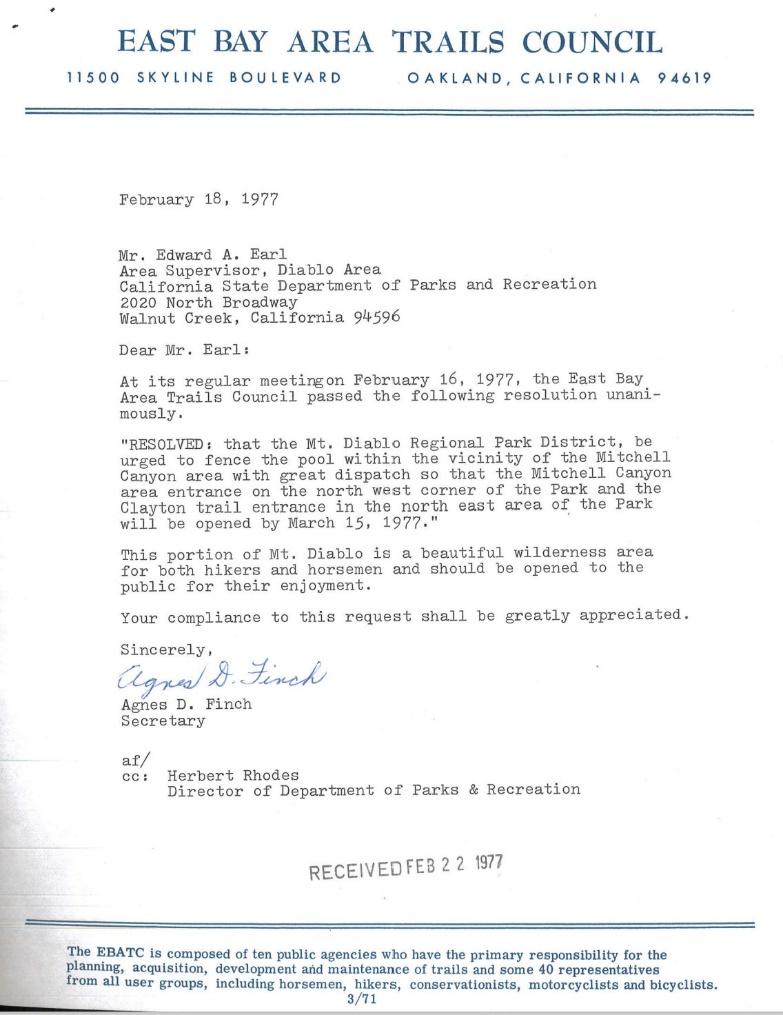
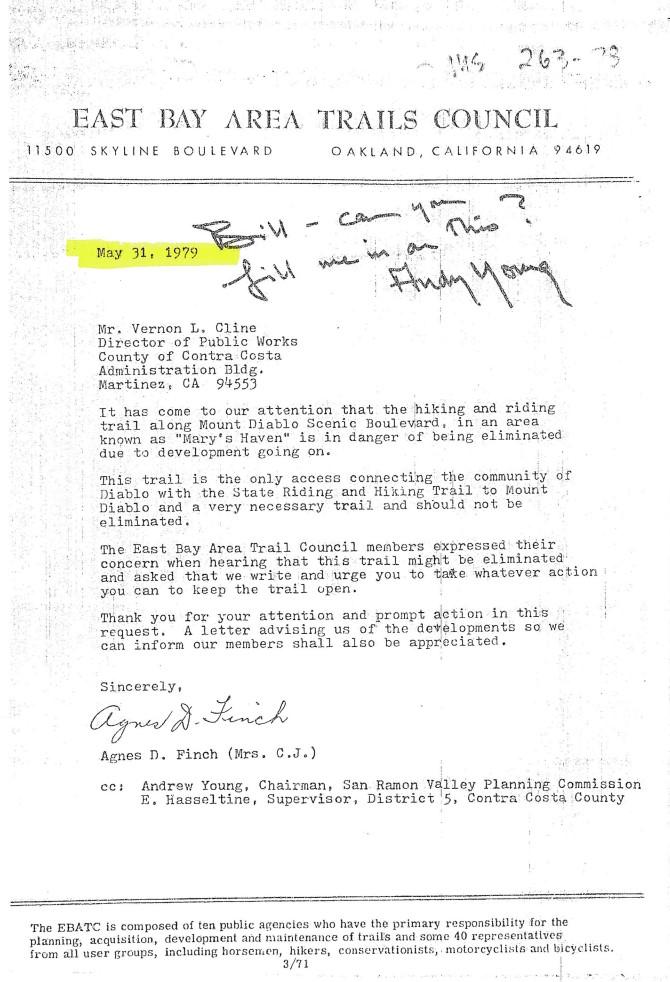
Here are some early examples of EBATC correspondence in support of user access to Mt. Diablo State Park:
George Cardinet
George Cardinet was co-father of the Trails system in California and an important balance to Hulet. George was active in the California State Horsemen’s Association and the Concord-Mt. Diablo Trail Ride Association so his advocacy came from the equestrian perspective, but he was always pushing for more trails and more multi-user connectors.
George’s trail advocacy work began in the 1940s when the original 1945 California State Riding and Hiking Trail Act (CHRT) was passed. In the 1960s George was chairman of the California State Horsemen’s Association, President of the Concord Trail Ride Accociation, and a Board member of the National Trail Ride Conference and association. In a 1972 Oakland Tribune article George is mentioned as currently active in the East Bay Area Trails Council. The Council is promoting the expansion of an already impressive network of Alameda/Contra Costa trails for horsemen, hikers, and bicyclists. Quoting George from a 1972 Oakland Tribune article, “We need even more trails, he said, “not just for horsemen, but where the terrain permits for hikers and bicyclists as well.”
Equestrians in those early days could cover significant ground, often on and across private property and they became instrumental in helping to create new trails. They advocated for new easements and connectors between private and public lands.
Sunset Magazine discussed trails on Mount Diablo in a 1985 article and said:
“Unlike the well-mapped trails of Mount Tamalpais, Diablo’s have been created mainly by horsemen and ranchers, and so have been less publicized. That difference means a wilder environment, one with good but less-used trails that can take you through woodland, grassland, and chaparral; past seepages, streams, and seasonal falls, and up some arduously scrambled rocks”
Bob Doyle
One more early pioneer in the efforts to protect public lands and to create and improve trails and connections is Bob Doyle. Most of us know Bob as the recently retired Executive Director of the EBRPD. What many do not realize is that long before he was employed by the Park District he was strongly advocating for and supporting trail efforts in and around Mt. Diablo.
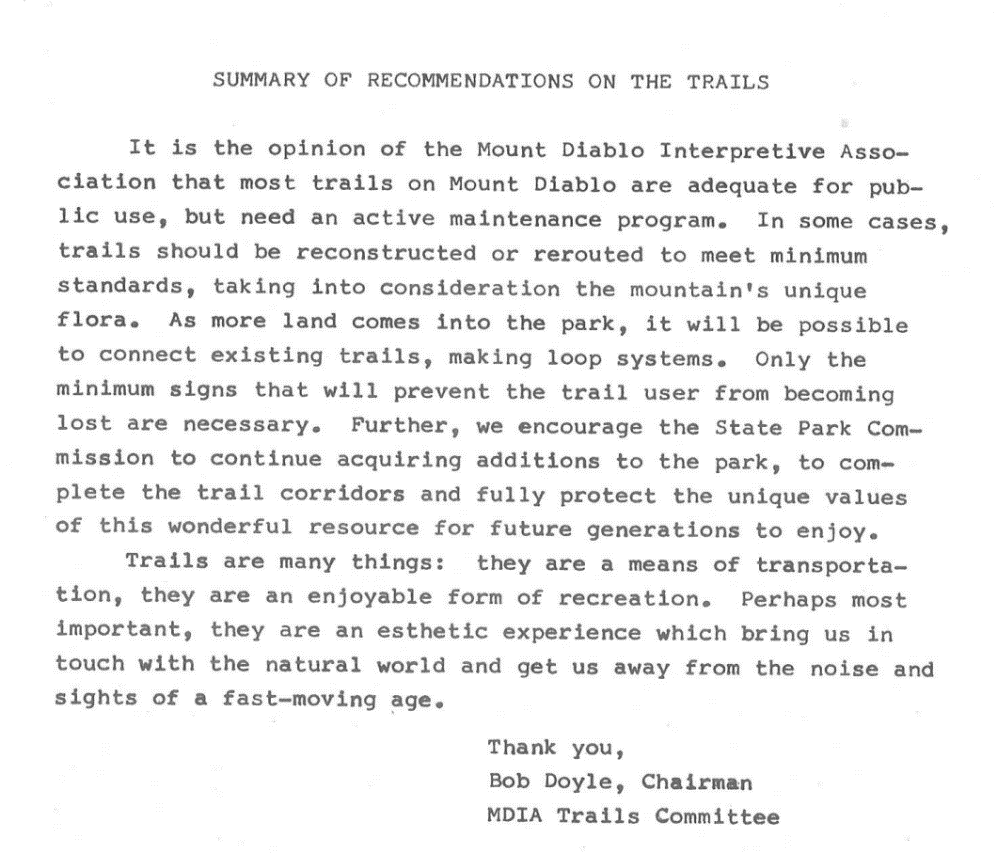
In September 1977 the 57-page Trail Inventory and Evaluation Mount Diablo State Park was Prepared by the Mount Diablo Interpretative Association (MDIA) (see link at bottom of article). The introduction begins “The purpose of this trail assessment is to give both the Department of Parks and Recreation and the public an accurate account of all the trails within Mount Diablo State Park. Signed Bob Doyle July 1977, Chairman of MDIA Trails Committee. Bob along with Chris Valle-Riestra both Chaired this Committee during this important growth period of the State Park.
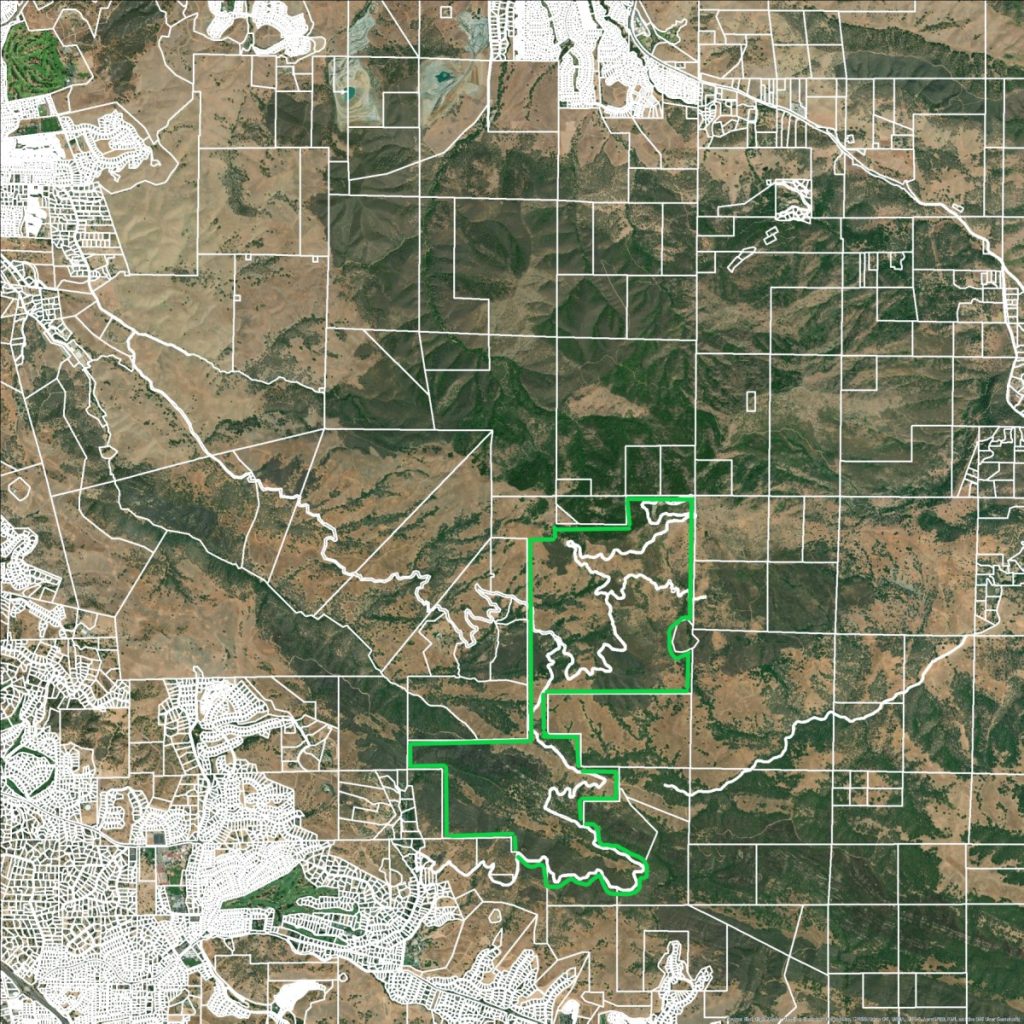
Mount Diablo State Park Expansion efforts.
Created in 1931 as a State Park, Mount Diablo consisted of only 2,003.5 acres with easements and ownership of the two roads leading into the park, Northgate and Southgate Roads. The actual State Park lands adjacent to the roads only began miles up the actual roadways. The State Park itself was smaller than many of the private ranches in the area. The graphic below shows the original 1931 park, not including the 145.55 acres added before 1947 to make the park 2,149.05 acres in size. Every odd shape is a separate private parcel that required negotiation and purchase if the State Park were to expand.
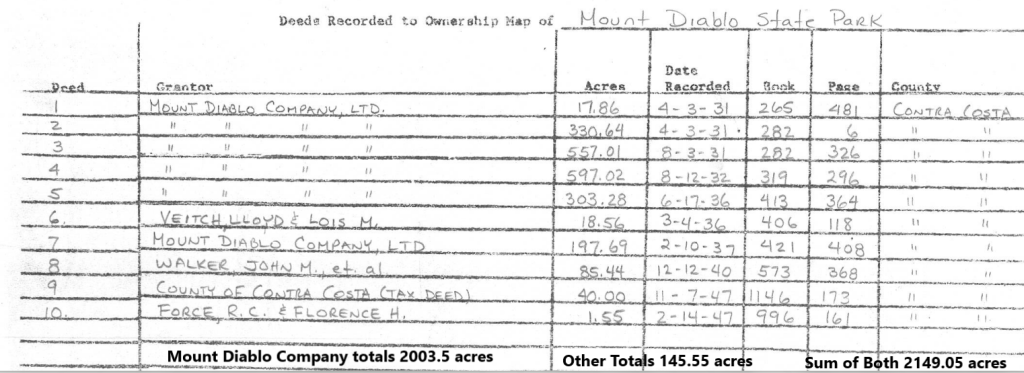
This document shows the deed references for the first 10 purchases, 2003.5 of these acres from the Mount Diablo Company (Walter Frick) and the others added between 1936 and 1947 to total 2,149.05 acres.
Below is the first official Mount Diablo State Park Trails map from 1940 sourced from the Contra Costa Historical Society with added blue graphics.
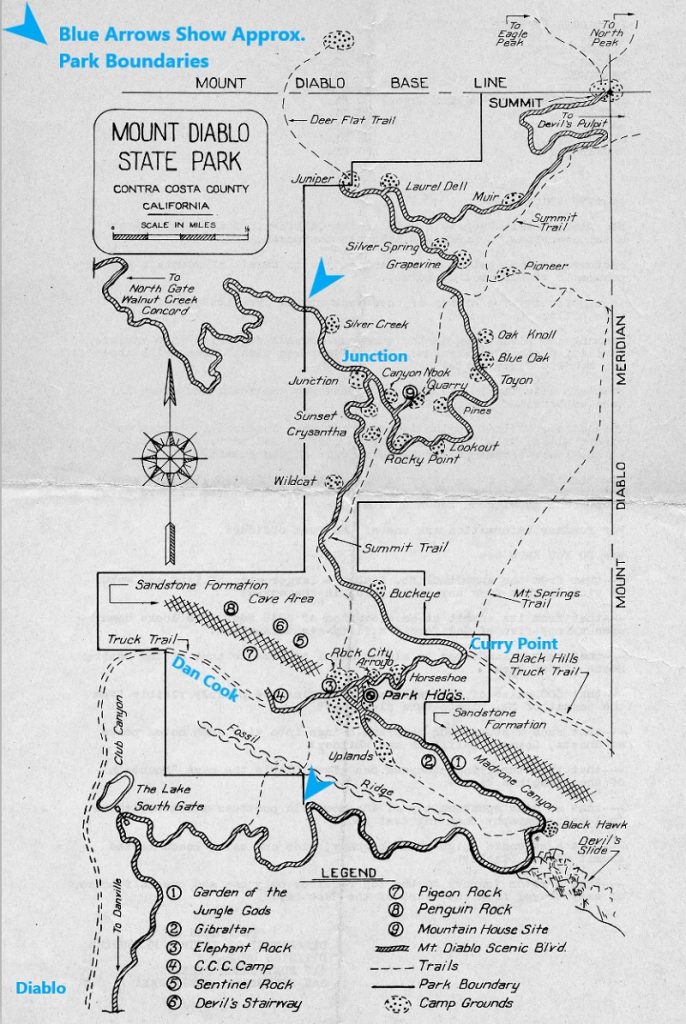
Coming out of Diablo at the bottom left, note the arrow of switchbacks just below Diablo Lake, note the original 1874 stage route to Dan Cook, labeled Club Canyon and Truck Trail, and note that it only entered the official 1940 State Park far up the original road. Note that Park Headquarters and the Junction were the centers of activity and these are both miles up Mt. Diablo Scenic Blvd. There are very few official trails. Mount Diablo was basically a driving park. People drove, parked and hiked around or rode around and then left again by vehicle.
The 1964 Proposition 1, the Recreational Land Bond Measure, opened the floodgates of acquisition funds and the 1960s saw the first real expansion efforts for Mount Diablo as shown in the yellow colors depicting the 1960s park additions.
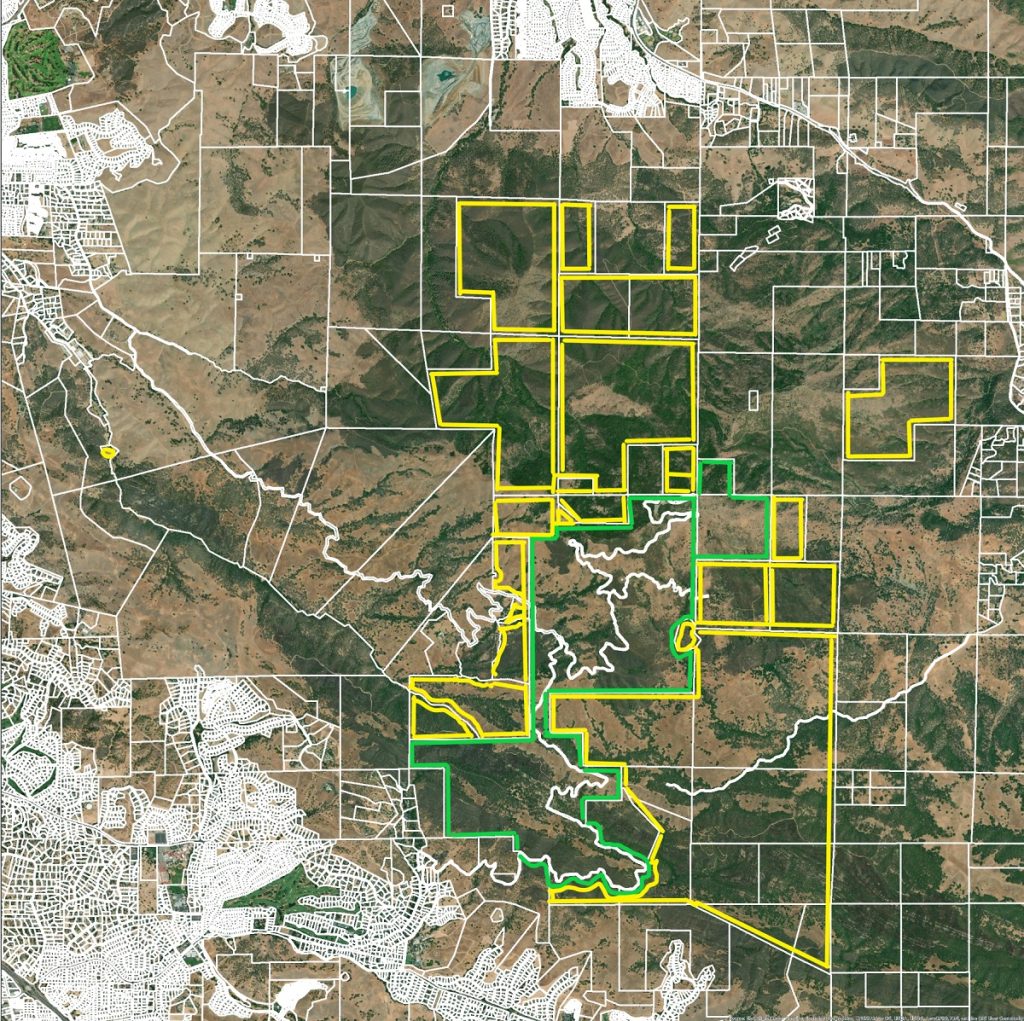
This was an important first step in expanding park boundaries and points of access. Further, bond acts in 1974 and 1976 provided critical funds for the 1970s expansions (shown below in orange). Most importantly this included the Murchio and Macedo Ranch purchases for the creation of two official Staging areas. The mountain was no longer a driving destination but could be accessed on horse or bike or foot via these new staging areas.
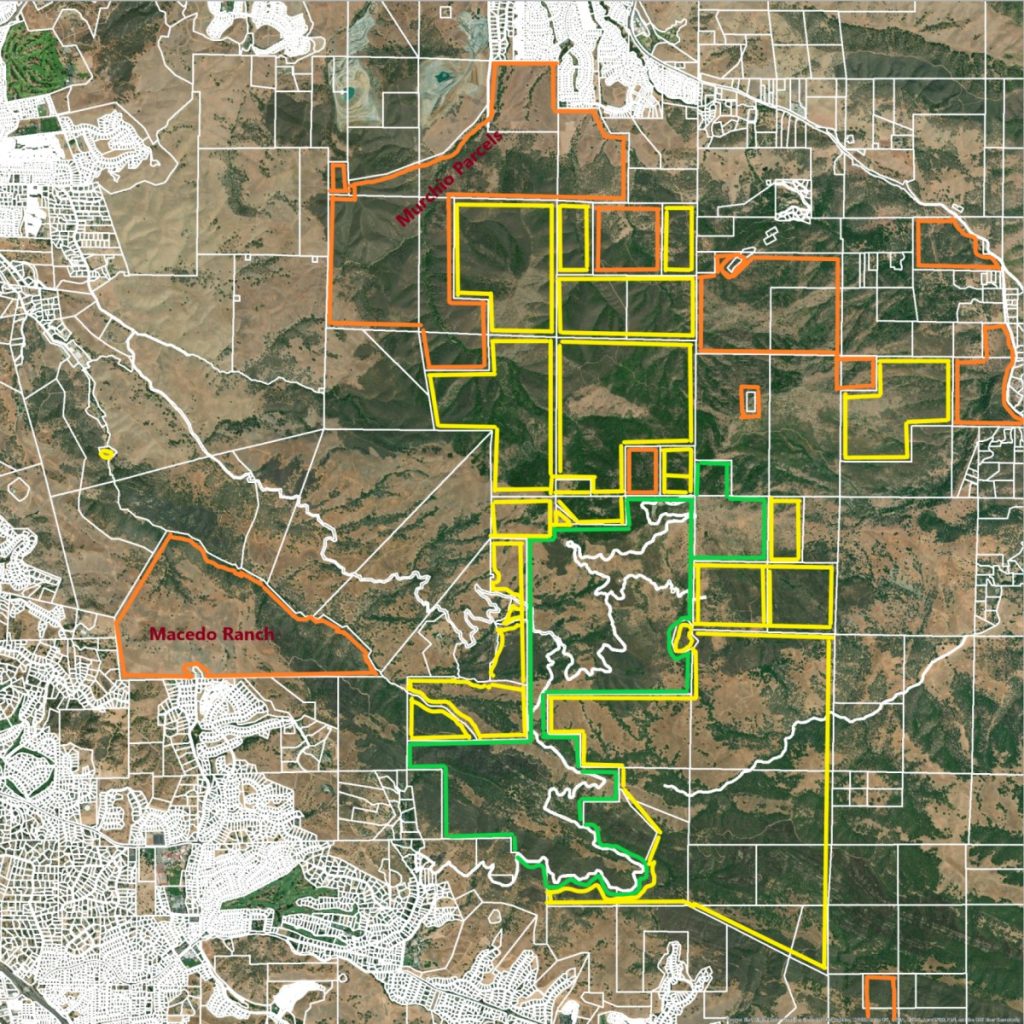
The 1980 Bond Act plus development mitigation lands donated to the State from Blackhawk and many other housing developments pushed the acreage of Mount Diablo to closer to today’s 20,000 acres (1980s additions shown in red).
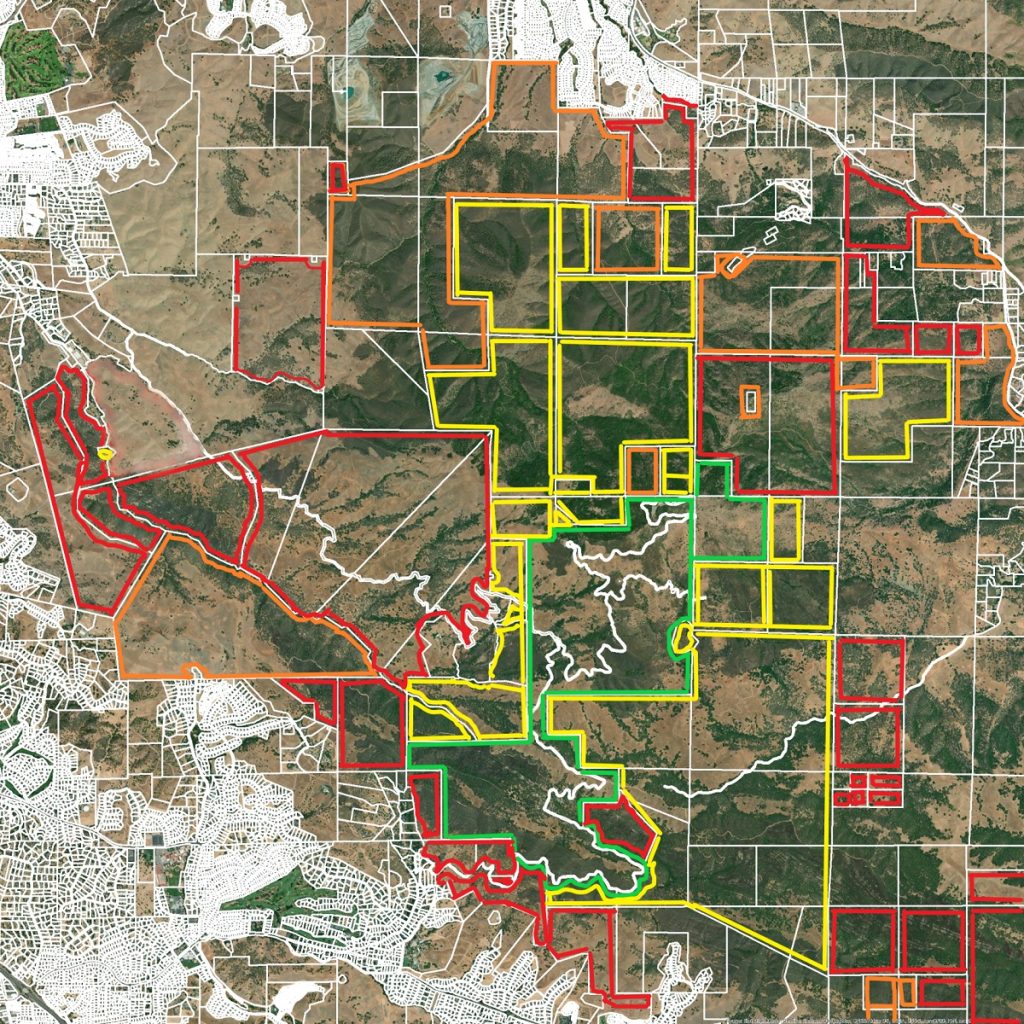
When considering the sheer size of Mount Diablo State Park and the expansion efforts required to expand 10 times in size over 30 years, it is hard not to be in awe of the efforts of so many who helped make this happen.
These early volunteers and local advocates working through EBATC were critical sources of help to EBRPD and the State Parks in their efforts at expansion.
What does the Future Look Like? Who are Today’s Trail Advocates?
Sadly, we do not have strong leaders in the trail advocacy work. It has gotten harder and harder to build new trails. Environmental regulations and bureaucracy have hamstrung public agencies or severely limited their ability to build or alter existing trails. User groups have been worn down by the lack of action and the perceived tone-deaf nature of public agencies.
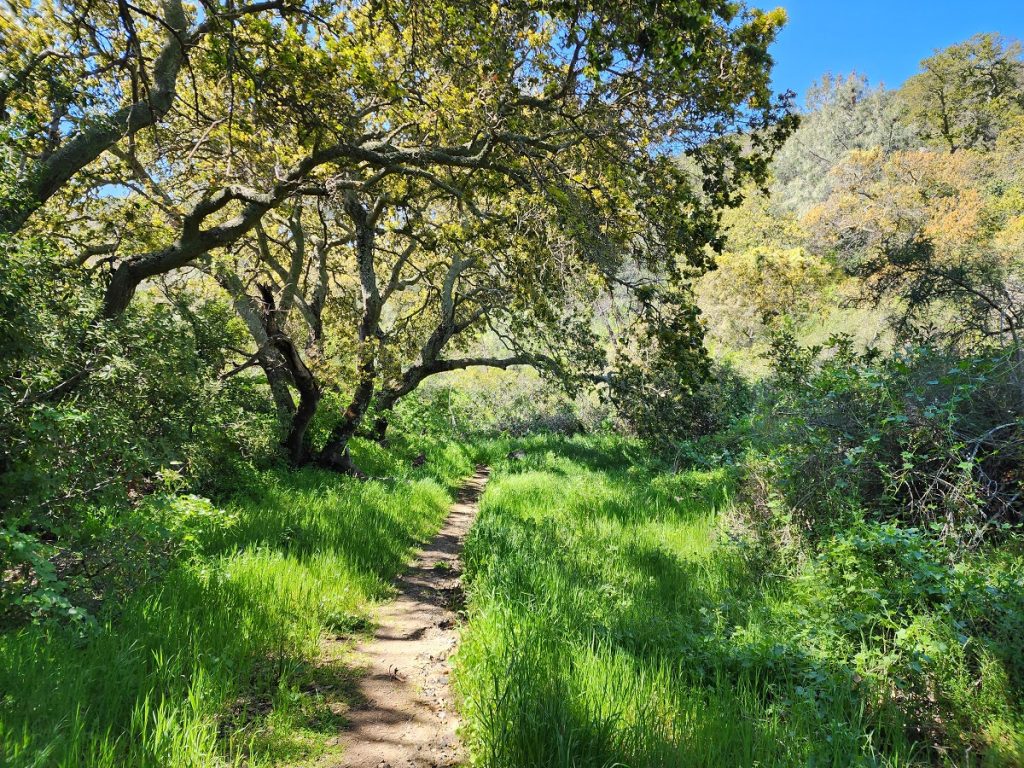
Mount Diablo State Park routinely updates their 10-year trail plan and then does little to nothing about their trail priorities. EBRPD probably does the best job, but they too are constrained by bureaucracy and the same regulatory morass that confronts trail efforts. While we can argue over who should have what rights to which trails, we need to remember this important fact:
Public open space is critical to the broad public’s enjoyment of their immediate surroundings. The operative word is public. Open spaces not just to appreciate from afar but to enjoy, explore, learn about, and appreciate.
For those who want access to these protected open spaces, trails must be available. Trails must be maintained. I would go so far as to say that once a beautiful and well-designed trail is built and in use, it will never disappear. Trails are almost as important as the initial land preservation as Hulet suggested. Especially connector trails that create loops or connections between ridgelines or adjacent protected lands.
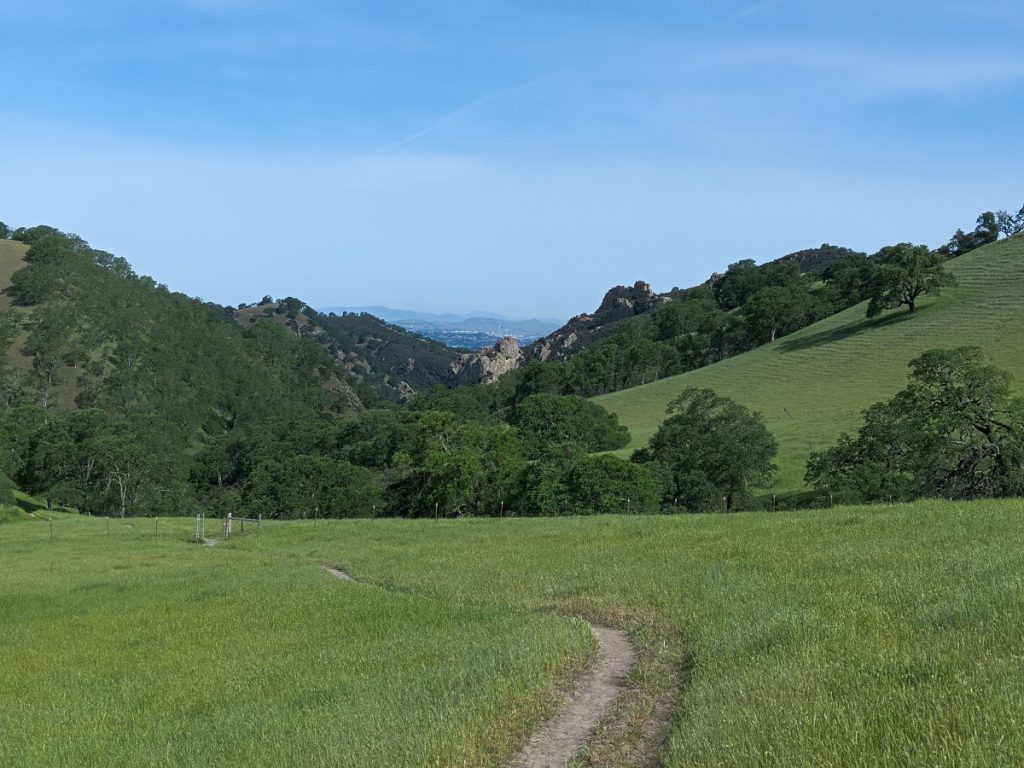
Public funds for public lands are for the recreational enjoyment of the public. Trails and connectors are integral to this process. All user groups can do better. We must collectively advocate for more trails, improve existing trails, and selectively create more loop connectors. Smart loop trails that are well-maintained preserve and protect the surrounding lands, they are environmentally important.
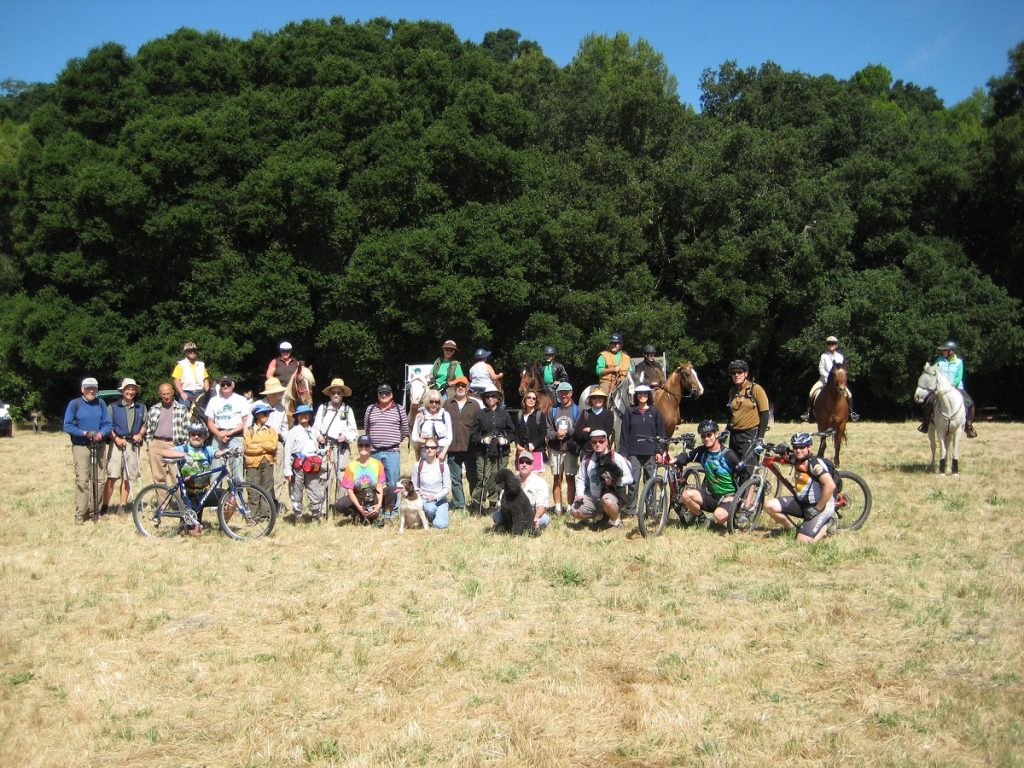
We owe an enormous debt of gratitude to the early trail pioneers, those users who sat in monthly meetings over 50 years ago helping to create the foundation of today’s trails and connectors. They made every effort to speak with one voice in advocating for funding and connectors and we all benefit.
Mount Diablo State Park Growth Video
Links Below:
Carol Hicke 1981 Interview- Hulet Hornbeck Park District Acquisitions 1965-1981
1970 East Bay Area Trails Council Bylaws
Trail Inventory and Evaluation Mount Diablo State Park 1977 – MDIA